
The Ultimate Guide to Crispy Dairy-Free Pizza Crust
Friday is pizza night in my house, and this dairy-free pizza crust is the foundation everything else is built on. For years my homemade crusts came out either cracker-thin and bland or thick and doughy in the middle, and I almost gave up and ordered in. The turning point was two small things: getting the water temperature right so the yeast actually wakes up, and a splash of vinegar for a tender, flavorful chew. Now I get a crust that’s crackly-golden on the bottom, pillowy at the edges, and sturdy enough to hold all my favorite toppings. The smell of it baking pulls everyone into the kitchen, and there’s never a slice left over.
By Brooks · Tested and updated May 31, 2026
Key Takeaways
- Naturally dairy-free — a classic yeast dough needs no milk or butter at all.
- Water at 110–115°F is the make-or-break step for waking up the yeast.
- A teaspoon of vinegar tenderizes the dough and deepens the flavor.
- A hot oven and hot tray give that crackly, pizzeria-style bottom.
- Make-ahead and freezer friendly — the dough waits happily for pizza night.
What Is Dairy-Free Pizza Crust?
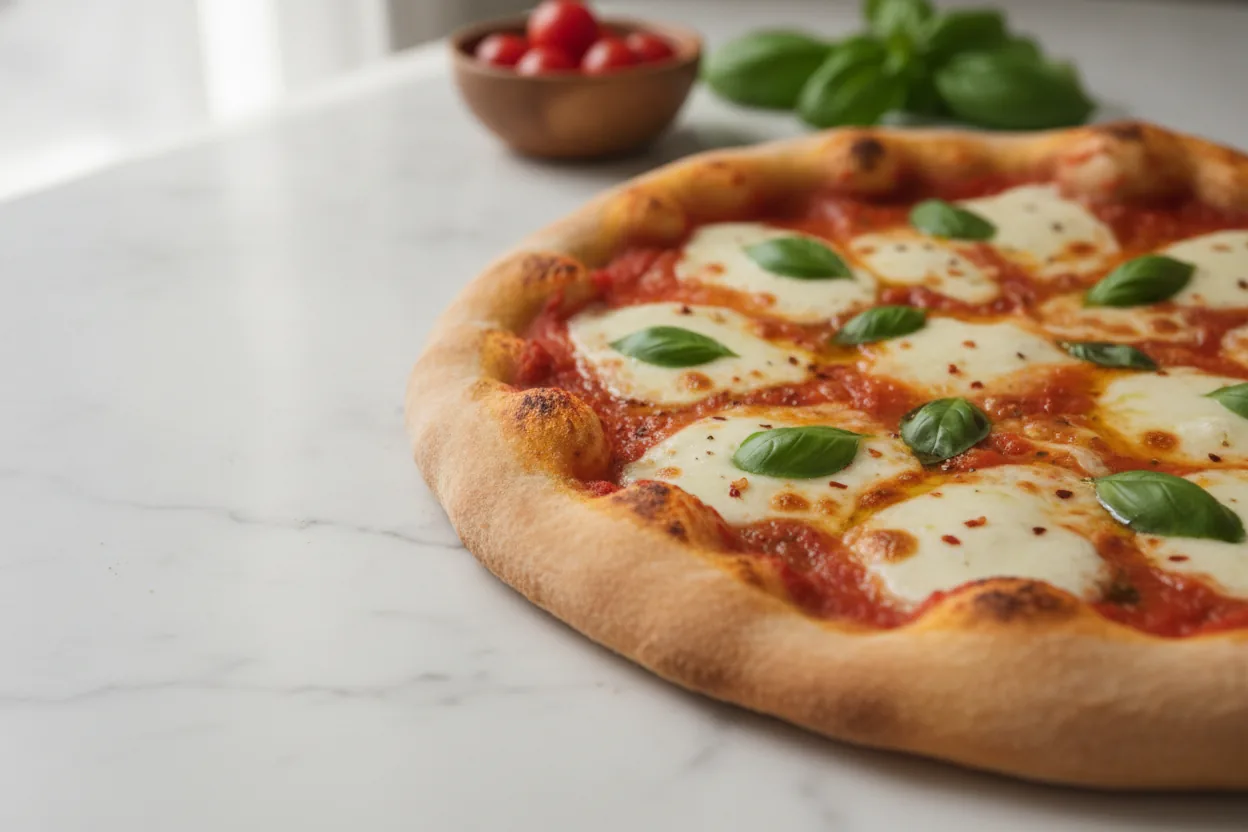
Dairy-free pizza crust is a yeast-leavened bread base made with no milk, butter, cheese, or cream — just flour, water, yeast, olive oil, and salt. Most traditional pizza dough is already dairy-free, but this version is fine-tuned for a crisp bottom and chewy edge so it stands up to any topping. The olive oil adds richness and helps the crust brown, while a splash of vinegar keeps it tender. It’s an easy, reliable base for a fully dairy-free pizza night at home.
Why You’ll Love This Recipe
- Crispy yet chewy. Golden, crackly bottom with a soft, airy edge.
- Simple pantry ingredients. Five basics you almost always have on hand.
- Reliable. Clear cues for temperature and rise mean it works every time.
- Versatile. Shape it thin and crisp or thick and fluffy.
- Make-ahead. The dough rests in the fridge or freezer until you’re ready.
Ingredients
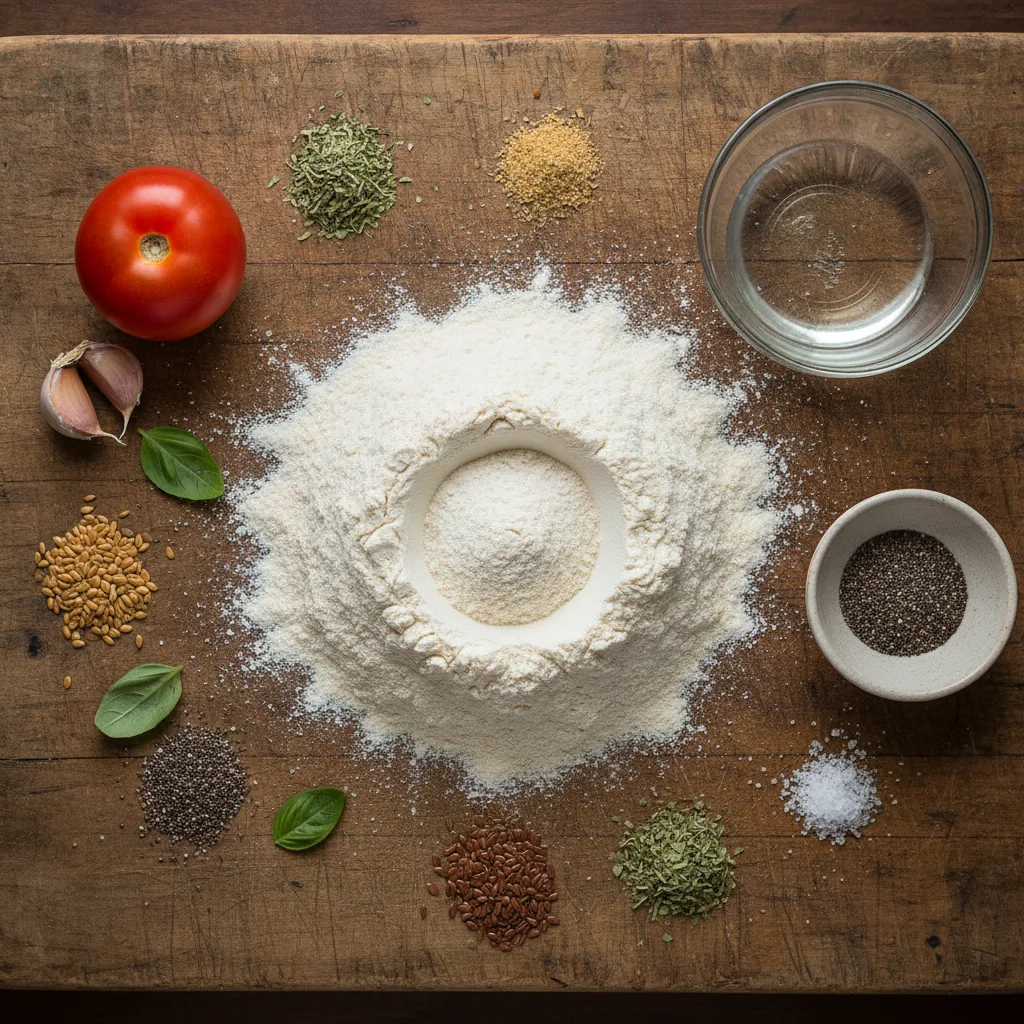
This makes one large 12–14 inch crust (about 8 slices). A kitchen thermometer for the water is the one tool worth grabbing.
- 2 1/2 cups (315 g) all-purpose flour, plus more for dusting
- 1 cup (240 ml) warm water (110–115°F / 43–46°C)
- 1 packet (2 1/4 teaspoons) active dry or instant yeast
- 1 teaspoon sugar
- 2 tablespoons extra-virgin olive oil, plus more for the bowl
- 1 teaspoon apple cider vinegar
- 1 teaspoon fine sea salt
Love an easy homemade base? You’ll breeze through my no-yeast dairy-free bagels using a similar simple-dough approach.
How to Make Dairy-Free Pizza Crust
Step 1: Bloom the yeast
Stir the yeast and sugar into the warm water and let it sit for 5 to 10 minutes until foamy. Tip: If it doesn’t foam, the water was too hot or too cold, or the yeast is old — start over rather than risk a dense, flat crust.
Step 2: Make the dough
Add the olive oil, vinegar, salt, and flour to the yeast mixture and stir until a shaggy dough forms. Tip: Add the flour gradually — depending on humidity you may need a touch less, and a slightly tacky dough bakes up far better than a dry one.
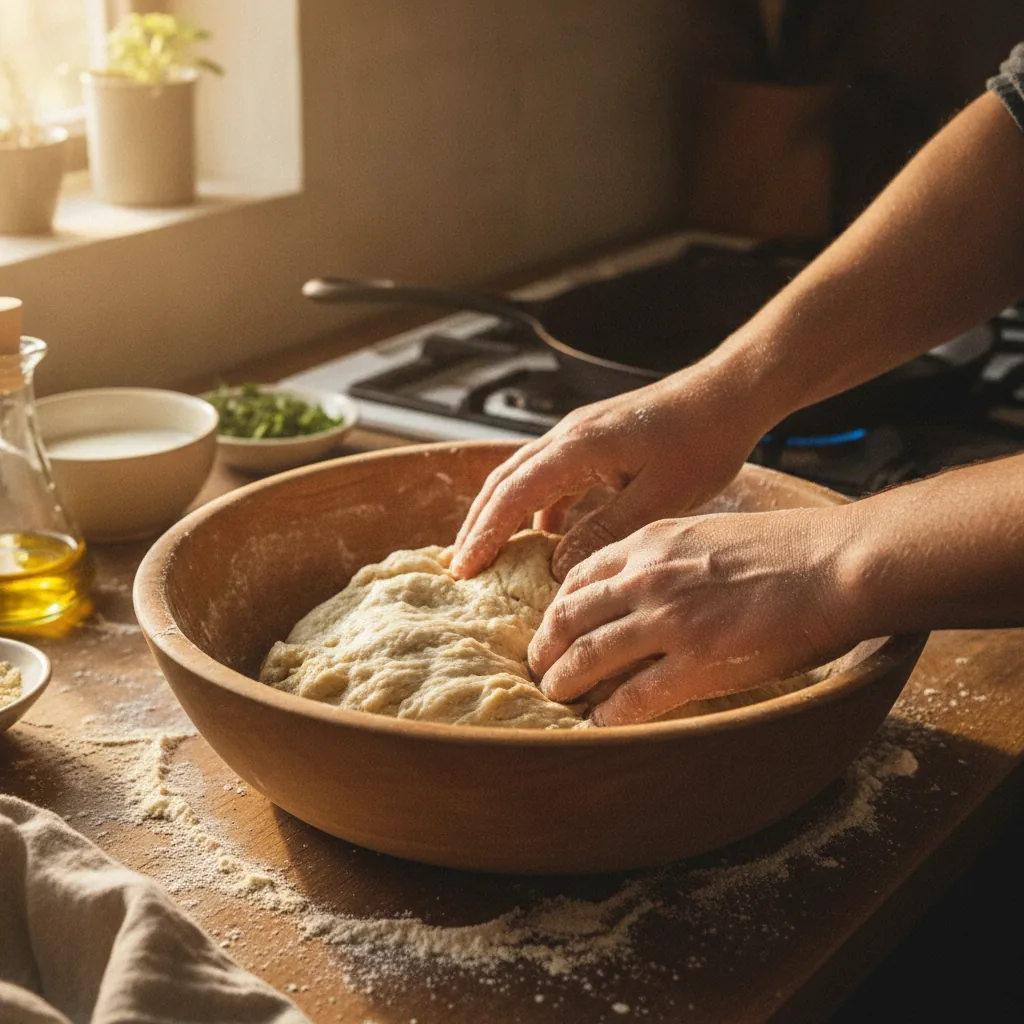
Step 3: Knead until smooth
Knead on a floured surface for 6 to 8 minutes until smooth and elastic. Tip: The dough is ready when it springs back slowly after a gentle poke — that’s the gluten developed enough to trap air for a chewy crust.
Step 4: Let it rise
Place the dough in an oiled bowl, cover, and let it rise in a warm spot for 45 to 60 minutes until doubled. Tip: A turned-off oven with the light on makes an ideal draft-free spot for a reliable rise.
Step 5: Shape and pre-bake
Stretch the dough onto a hot tray or stone and pre-bake at 475°F (245°C) for 5 minutes before topping. Tip: That quick pre-bake sets the base so it stays crisp instead of going soggy under the sauce and toppings.
Step 6: Top and finish baking
Add your sauce and toppings, then bake another 8 to 12 minutes until the edges are deeply golden. Tip: Brush the rim with a little olive oil in the last few minutes for a glossy, flavorful crust edge.
Expert Tips & Tricks
- Use a thermometer for the water; guessing is the number-one reason yeast doughs fail.
- Preheat the tray or stone so the bottom crisps the moment the dough hits it.
- Don’t drown it in sauce — a thin, even layer keeps the crust crisp.
- Rest the dough cold overnight for even more flavor and easier stretching.
Variations & Substitutions
- Gluten-free: Use a 1:1 gluten-free bread blend; the dough will be softer and need spreading rather than stretching.
- Whole wheat: Swap up to half the flour for whole wheat and add a tablespoon more water.
- Herb crust: Knead in 1 teaspoon dried oregano or garlic powder.
- White pizza: Skip the tomato and brush with my dairy-free bechamel sauce for a creamy base.
- Thin and crispy: Skip the second rise and roll the dough very thin before baking.
Storage & Reheating
- Refrigerator (dough): Keep covered for up to 3 days; let it come to room temperature before shaping.
- Freezer (dough): Freeze the risen dough ball for up to 3 months; thaw overnight in the fridge.
- Baked crust: Par-bake, cool, and freeze; top and finish straight from frozen.
- Reheat slices: Warm in a hot skillet for 3 minutes to revive the crisp bottom.
Nutrition Information
Values are an estimate per slice (crust only, 8 slices), based on USDA FoodData Central reference data. Toppings will change the totals.
| Nutrient | Amount per slice |
|---|---|
| Calories | 180 |
| Total Fat | 4 g |
| Saturated Fat | 0.6 g |
| Carbohydrates | 31 g |
| Sugar | 1 g |
| Fiber | 1.5 g |
| Protein | 5 g |
| Sodium | 300 mg |
Pizza is easy to keep dairy-free once you make your own base; this guide to dairy-free cheese covers the toppings and sauces worth double-checking.
Frequently Asked Questions
Is pizza crust usually dairy-free?
Classic pizza dough is typically dairy-free, made from flour, water, yeast, oil, and salt. Always check store-bought dough, though, since some brands add milk powder or butter.
Why is my dairy-free pizza crust not rising?
The water temperature is usually to blame. Too hot kills the yeast and too cold won’t activate it, so aim for 110–115°F. Old yeast is the other common culprit.
How do I get a crispy bottom?
Preheat your tray or a pizza stone, pre-bake the crust for 5 minutes before topping, and don’t overload it with sauce. A hot surface and a light hand keep the base crisp.
Can I make it gluten-free?
Yes. Use a 1:1 gluten-free bread blend that contains xanthan gum. The dough behaves more like a batter, so spread it with oiled hands rather than stretching it.
Can I freeze the dough?
Absolutely. After the first rise, wrap the dough ball tightly and freeze for up to 3 months. Thaw it overnight in the fridge and bring to room temperature before shaping.
Round out pizza night with more dairy-free bakes like soft dairy-free tortillas or a loaf of dairy-free gluten-free bread.
Related Dairy-Free Recipes
⭐ Rate This Recipe
Did you make this recipe? Tap the stars below to rate it and leave a quick review — your feedback helps fellow dairy-free cooks and makes our day. 💛
There are no reviews yet. Be the first one to write one.